


Special to WorldTribune.com
 By John J. Metzler, August 30, 2026
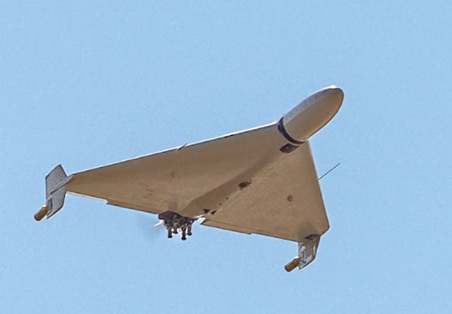
Principal among the lethal risks Russia’s invasion of Ukraine has brought to this modern battlefield has been the wanton use and proliferation of drone warfare.
The armed drone, something outside the pages of science fiction a mere generation ago, has assumed a deadly role both against military and increasingly civilian targets.
Probably nowhere has drone warfare taken such a fatal toll, as both the Russians and the Ukrainian defenders have used the plentiful and relatively cheap technology to wreak havoc on battlefields which otherwise evoke the trench warfare and static lines of the First World War.
Indeed, over the past century the drone has replaced cavalry, the tank, cruise missiles and supplanted cyber warfare and precision munitions as an easily accessible and deployable weapon and usable weapon of war.
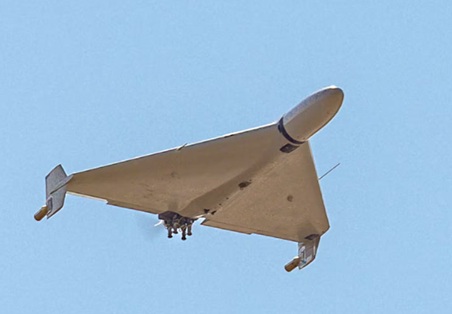
In response to Russia’s drone attacks, Ukraine has deployed waves of drones to hit oil storage and refinery facilities deep inside Russia.
Addressing correspondents on World Humanitarian Day via a live video link from Ukraine, Tom Fletcher, the UN’s Chief Humanitarian Coordinator spoke of the global tragedies faced by humanitarian workers on a daily basis adding that in Ukraine, “we’re seeing them increasingly powered by a chilling alliance between technological ingenuity and modern warfare, and the victims are civilians and they are humanitarians.”
Ukraine, he conceded is one of those places which faces the “dystopian reality” of widespread drone use. “I’ve not been anywhere where drones are so much part of the conversation. Everyone, from the kids I met in shelters, civilians, humanitarians, my colleagues… And so these weapons have become part of life and part of the language of people here.”
Tom Fletcher stated searingly:
“I met civilians who’ve lost limbs to these first-person-view drones that are everywhere. And of course, the terrifying thing here is that the operator of that drone knows exactly what they’re doing. If they fly around the person selling fruit and vegetables in the market, or the humanitarian delivering food, they have a good look at them before they take the shot that will kill or maim them for life.”
He added:
“I visited a hospital where doctors told me around 70 per cent of their wounded patients have blast injuries from drones…the drone that had caused such damage to Kherson Hospital… It was a $300 drone. So, increasingly cheap and available munitions.” ….
So you see this dystopian reality of these kill zones and kamikaze drones increasingly putting lethal power into the hands of more people, and all of that without the accountability…We have a sense that it’s not just the killer who’s further from the victim, but that accountability and justice are further from the victim, and that the technology is changing every week as these drones become more sophisticated.”
Significantly Tom Fletcher implored, “But what doesn’t change … is international humanitarian law. The law is meant to protect us, meant to protect civilians from all weapons, however sophisticated they are. So we need those investigations. We need accountability.” Still the UN’s Humanitarian Chief implored, “Concern from Member States is not enough. We need action right now.”
Naturally accountability quickly gets lost in the miasma of drone producers and subcontractors.
Both China and Russia have sophisticated weapons programs as does now Ukraine. In Russia the Rubicon Drone Warfare Center established in 2024, remains a multifaceted military facility which creates, coordinates and centralizes military drone attacks across Ukraine.
According to the Foreign Policy Research Center (FPRI) in Philadelphia, “the Rubicon Center was created to centralize and scale Russia’s previously fractured unmanned technology initiatives aerial, ground, and naval, under a unified umbrella responsible for research, procurement, training, and operational deployment.”
According to FPRI Senior Fellow, Rob Lee, “Rubicon has a broad remit. It plays an active role in developing the doctrine for the employment of unmanned systems: developing and spreading new tactics, techniques, and procedures across the military, training unmanned systems forces’ units, and improving and modernizing unmanned systems and other technologies.”
Rubicon numbers near 5,000 drone specialists; but beyond headquarters units many operatives serve in frontline squads near the actual lines of engagement.
Rubicon has become “Russia’s best technological unit,” stated Maria Berlinska, head of the Ukrainian Aerial Reconnaissance Support Center, a civilian group that assists the military, as she advised Radio Free Europe/Radio Liberty.
In the meantime, the deadly buzz of drone attacks continues; Russian drones hit a shopping center in the city of Kryvyi Rih in central Ukraine, killing 14 and injuring scores of others; the city is the hometown of President Volodymyr Zelenskyy. Ukraine has massively responded with waves of drones pounding oil storage and refinery facilities deep inside Russia.
John J. Metzler is a United Nations correspondent covering diplomatic and defense issues. He is the author of Divided Dynamism the Diplomacy of Separated Nations: Germany, Korea, China (2014). [See pre-2011 Archives]
