


by WorldTribune Staff, October 15, 2026 Non-AI Real World News
What really happened in the streets all across Iran early this year? As in other closed societies like North Korea and communist China, western media did not provide credible, firsthand reports.
On January 8–9, 2026, anti-government protests in Iran reached a boiling point across more than 100 cities. The Iranian regime went to great lengths to implement a near-total internet and telecommunications blackout to suppress the flow of live information.
Despite these severe restrictions, cell phone videos smuggled out of the country documented intense street clashes, fires, and a murderous security crackdown that resulted in mass casualties.
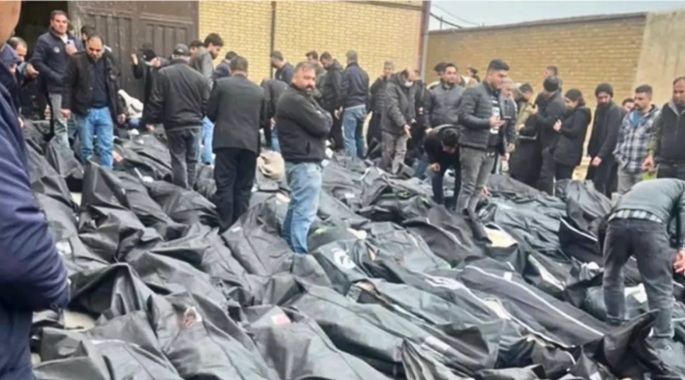
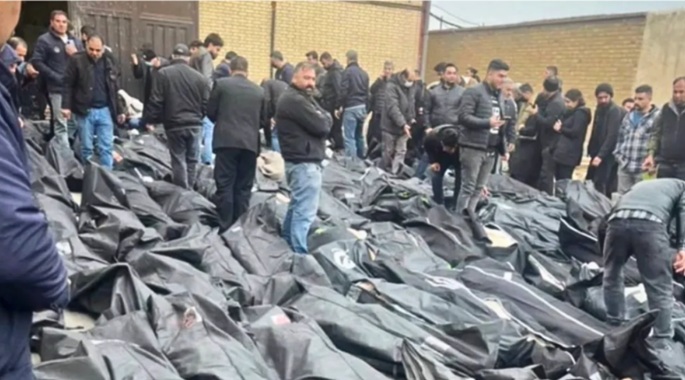
Grieving families search for loved ones in body bags outside the Teheran Province Forensic Diagnostic and Laboratory Center in Kahrizak on Jan. 14, 2026. / Photo by Richard Pollock
Verified footage showed massive crowds in Teheran and other cities, with protesters chanting “Death to the dictator.”
Leaked videos showed crowds of families at the Teheran Medical Examiner’s compound searching through hundreds of bodies of protesters killed by gunfire.
The demonstrations, which began in late December 2025 due to a devastating economic crisis, rapidly shifted into a national uprising demanding a complete overhaul of the political system and an end to the theocratic Islamic regime.
Human rights monitors and media verifications later indicated that 40,000, if not more, protesters were feared dead during the Iranian regime’s brutal crackdown on the demonstrations.
A newly released documentary, “This Is Our Story – Voices From Iran’s January Protests,” show first-person videos taken in real-time inside Iran from Dec. 28, 2025, to mid-January 2026.
The “film was produced by compiling real-time amateur videos taken by local Iranians. The videographers recaptured a piece of dark history that has been lost in the West even though it occurred only nine months ago,” Richard Pollock wrote for OANN on Oct. 1.
“The Western media acts as if it never happened. Its wretched story has virtually disappeared.”
The documentary, which was released on Sept. 26, includes four episodes that were made available for free, streaming on the Manoto You Tube Channel. Manoto is an international Persian language general entertainment channel founded in 2010 by a London-based Iranian couple. “This Is Our Story” is in Persian with English subtitles.
“This Is Our Story,” Pollock noted, “is told first-hand by actual participants in the Iranian uprising. It also provides vivid documentation of the unspeakable atrocities committed by the Ayatollah’s regime over the two-day period.”
In Teheran, it is estimated that more than 1.5 million demonstrated against the government on Jan. 8-9 and more than five million took to the streets throughout the rest of the country.
Initially, security forces lobbed tear gas into the crowds. Video captures government forces as they begin to use live ammunition. The gunfire is rapid. “They’re firing everywhere. “There’s blood everywhere,” one protester screams.
In a video from Haft Hoz Square in Teheran Province more gunfire is heard. Protesters fall to the ground. “This is the blood of our people,” a young man screams. “Haft Hoz has turned into a battlefield,” another man yells.
“They’re firing live ammunition from the rooftop” a bystander from an apartment says. “Yeah, shameless bastards,” his friend spits out. The shooters hide in the rooftops. “Come outside, bastards,” one protester shouts.
Various videos capture extremely rapid gunfire, hundreds of rounds per minute. “In Isfahan, they’re using heavy machine guns against the people,” a demonstrator shouts.
The videos show cities across Iran with blood on the roads, sidewalks, against doors and walls. Most cities resemble war zones. There are fires burning, hulks of burned-out cars and buses, bodies, and debris filling the roads.
“At its most gripping, ‘This Is Our Story’ shows the deep emotional toll on a nation’s people when thousands of body bags were placed in local hospitals and mortuaries,” Pollock wrote. “Families had to painstakingly open each bag to find a husband, wife or child. It also shows the many funerals that became lightning rods for further dissent.”
“The video makes clear that the anger of the people against the Islamic regime is very deep. The mass killings have touched a raw nerve among many Iranians. There are feelings of distrust and deep hate for this regime.”
The West’s response “has been pathetic,” Pollock noted.
On Jan. 13, UN High Commissioner for Human Rights said he was ‘horrified’ by the violence against protesters. On Jan. 15, the UN Security Council expressed “deep alarm.” But little else was done.
Pollock added: “And finally last week – nine months after the slaughter – the Human Rights Council quietly confirmed what was patently obvious: there was widespread murder of peaceful protesters. The HRC concluded their acts constituted ‘crimes against humanity.’ That, of course hasn’t filled many headlines in the West.”
