


Special to WorldTribune, June 18, 2026 Real World News
Geostrategy-Direct, June 16, 2026
Many opinions have been aired about the new U.S.-Iran deal, but on June 16, few could be backed up. Excluded from the terms of the June 14, 2026 agreement, the view of many in Israel was negative. However longtime Netanyahu ally Ron Dermer is upbeat.
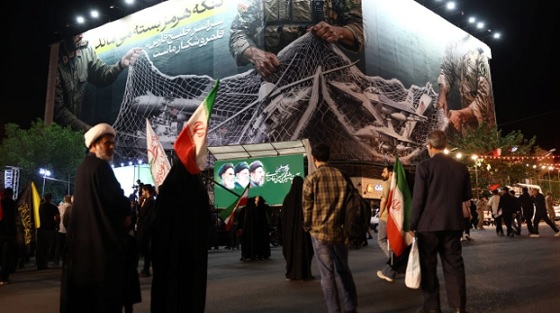
A billboard with a graphic design about the Strait of Hormuz on a building in Tehrean on May 6, 2026. / Majid Asgaripour / WANA
Meanwhile, Middle East and Gulf state leaders initially praised U.S. President Donald Trump’s peace deal with Iran.
“I have followed with interest the announcement of the memorandum of understanding reached between the United States of America and the Islamic Republic of Iran, and what it includes in terms of affirming a halt to military actions and escalation in the region, including Lebanon,” Lebanese President Joseph Aoun posted to X.
Aoun added that he appreciated Lebanon’s inclusion in the agreement, noting that the people of Lebanon “look forward to these understandings being transformed into practical steps that put a definitive end to the cycle of violence, and establish a phase of stability, security, recovery, and reconstruction.”
Iran, Hizbullah, and Hamas have all been significantly weakened since October 7, former strategic affairs minister Ron Dermer said on June 15 at United Hatzalah’s Annual New York Gala in Lower Manhattan, according to a Hebrew summary of his remarks.
Dermer said that the current discussions should not be described as a nuclear deal, but rather as an effort to ease economic pressure internationally and, to some extent, on Iran.
“Within two or three weeks, we will know whether the Iranians are prepared to give up their nuclear program,” he said. “I doubt that will happen.”
Dermer said that while he had heard “many fears and concerns” about a possible agreement with Iran, Israel should “take a step back” and assess the current strategic picture.
“Two and a half years ago, Iran posed an existential threat to Israel,” Dermer said. “Three years later, Iran’s nuclear capability has been destroyed.”
He said Iran’s remaining leverage was its enriched material, located in two deeply buried sites, while its ballistic capabilities had been set back by years. That, he said, gives Israel time to strengthen its defenses.
As for Lebanon, Dermer said Hizbullah is no longer the force it was on October 7, though he warned that the organization still retains military capabilities.
“Hizbullah is maybe 25% of what it was before,” he said.
Dermer said defeating Hizbullah outright would require a force twice the size of the IDF, but stressed that Israel would not allow a terrorist organization to threaten its borders.
Full Report . . . . Current Edition . . . . Subscription Information
