


by WorldTribune Staff, October 2, 2026 Non-AI Real World News
The Chinese Communist Party’s fury was evident after Japanese Defense Minister Shinjiro Koizumi in late September suggested that Tokyo should hold “taboo-free” discussions on acquiring nuclear weapons and nuclear-powered submarines.
Koizumi stated on Sept. 28 that refusing to talk about these options clashes with the current sense of regional crisis.
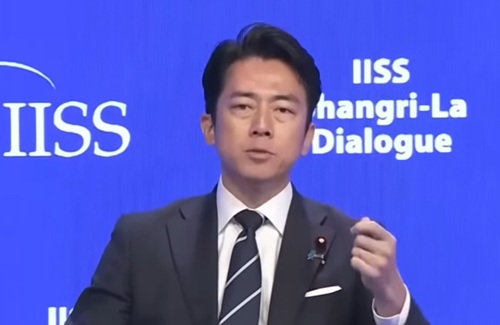
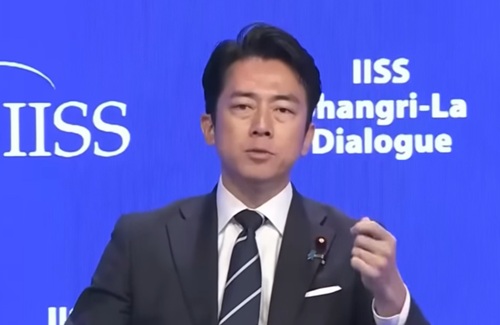
Japanese Defense Minister Shinjiro Koizumi / Video Image
Chinese Foreign Ministry Spokesperson Guo Jiakun responded on Sept. 30, as detailed in reports from the Global Times, that “whether Japan possesses nuclear weapons is not a matter for the Japanese side to discuss as it wishes.”
China insists that Japan is a non-nuclear-weapon state party to the Treaty on the Non-Proliferation of Nuclear Weapons (NPT), meaning it has an inescapable international duty not to manufacture, receive, or possess nuclear arms.
The Xi Jinping regime labeled Koizumi’s remarks a serious violation of the post-World War II international order and urged Tokyo to strictly honor its NPT commitments.
What exactly did Koizumi say to provoke the Chinese?
“Japan must possess the capabilities to firmly counter threats directed at us,” the Japan Times quoted him as proclaiming on a TV news program. “Within that context, decisions are being made without any taboos.”
Japan, Koizumi told reporters, “must possess the capabilities to firmly counter threats directed at us.”
Writing for The New York Sun on Sept. 30, columnist Donald Kirk noted: “With those words, the government of Prime Minister Sanai Takaichi has moved a significant step to breaking the inhibition against so much as hinting at developing a nuclear warhead. Never has a top Japanese official been so bold as to hint at such a possibility – or even use the word ‘nuclear’ as applied to defense.”
In Beijing, Guo noted that Takaichi had stated her adherence to all the NPT dictates — “not accepting, not manufacturing, not possessing and not proliferating nuclear weapons. These “inescapable international legal obligations.” Guo said, left “no room for bargaining.”
Kirk noted: “By raising the nuclear topic, Koizumi deepened festering differences with China that have worsened relations ever since Takaichi last November said that any attempt by the Chinese to take over Free China, or Taiwan, would create a “survival threatening situation” for Japan.
“The inference was that Japan was willing to go to war for the island province, which Japan ruled for half a century from 1895, when it defeated the Chinese, to 1945, when it surrendered at the end of World War II. The Communist regime in Beijing has never governed Taiwan, held by the anti-Communist ‘Nationalist forces’ of Chiang Kai-shek.”
Japan is also showing other signs of dropping constraints against nukes, including both nuclear weapons and nuclear-powered warships.
Koizumi cited the case of Finland as amending its laws against allied countries basing nuclear weapons within its borders, and he noted talk in France of spreading its “nuclear umbrella” over Europe.
The Japan Innovation Party, a junior member of the coalition needed to support Takaichi, has warned that nuclear subs are also needed to counter China’s growing power in the Pacific.
