


by WorldTribune Staff, October 27, 2026 — Real World News
Fed up Canadians are rebelling against woke provincial governments.
Recent provincial elections have demonstrated a clear voter realignment toward conservatives:
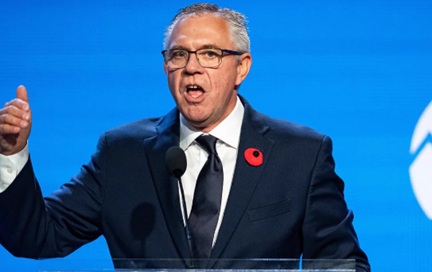
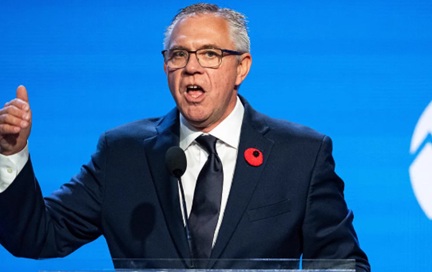
Lorne Doerkson’s Conservatives won 64 of the 93 seats in the British Columbia provincial legislature. / Video Image
• British Columbia: In a historic upset, the B.C. Conservative Party won a majority government, ending nine years of New Democratic Party (NDP) rule. Led by Lorne Doerkson, the party campaigned heavily against the incumbent government’s drug decriminalization policies, housing costs, and progressive legislation.
• Quebec: The rise of conservative sentiments has pushed conversations around secularism, immigration limits, and cultural preservation to the forefront, explicitly rejecting federal multiculturalism frameworks.
• Alberta & Saskatchewan: Premiers Danielle Smith (Alberta) and Scott Moe (Saskatchewan) have implemented parental rights legislation, restricting gender policies in schools and limiting gender-affirming care for minors. Both leaders explicitly frame these moves as an institutional check on what they term “woke” overreach.
With crushing inflation and unaffordable housing markets across major urban centers, Canada’s voters are increasingly fatigued by governments prioritizing progressive social policies over core economic issues.
In western provinces like British Columbia, a dramatic surge in opioid overdose deaths and public disorder associated with harm-reduction experiments has turned voters toward traditional “law and order” approaches.
The profound unpopularity of federal Liberal leader Justin Trudeau has created a massive political headwind for leftist provincial parties. Conservative Party leader Pierre Poilievre has successfully weaponized the word “woke” as shorthand for economic mismanagement, over-regulation, and perceived government overreach.
Polled data confirms this cultural disconnect: Comprehensive surveys conducted by institutes like the Macdonald-Laurier Institute indicate that on core culture war topics including free speech, parental rights, and heritage, a majority of Canadians lean significantly toward cultural liberalism or conservatism rather than the outcomes-based progressive options championed by leftists.
In British Columbia elections on Oct. 19, Conservatives won 64 of the 93 seats in the provincial legislature, while the NDP secured just 27 seats. The results marked the first Conservative provincial election victory in British Columbia since 1928, according to Reuters.
Conservatives rode to victory after the New Democrats opposed new oil pipelines and supported a ban on tankers on the northern coast. The Conservatives, meanwhile, pledged to double natural gas production in the next six years, end emission limits, and replace British Columbia’s carbon tax framework.
“Thank you, British Columbia,” Doerkson wrote on social media. “Tonight, you voted for change. You voted for a government that will listen, keep life affordable, and never take your hard-earned money for granted. I want to thank every volunteer who knocked on doors, made calls, and put up signs in the rain. I want to thank our candidates, who stepped forward in a snap election with no time to spare. And I want to thank my wife Shelley and my family for standing beside me every step of the way.”
In energy-rich Quebec, victory by a separatist party in the provincial general election on Oct. 5 is expected to make it tougher for leftist Canadian Prime Minister Mark Carney to maintain national unity against U.S. President Donald Trump.
The Coalition Avenir Quebec, which essentially ruled the province since 2018, lost all of its 79 seats.
Provisional results showed the predominantly French-speaking province of nine million opted for the Parti Quebecois of Paul St-Pierre Plamondon.
Trump congratulated Plamondon in a Truth Social post:
