


by WorldTribune Staff, October 16, 2026 Non-AI Real World News
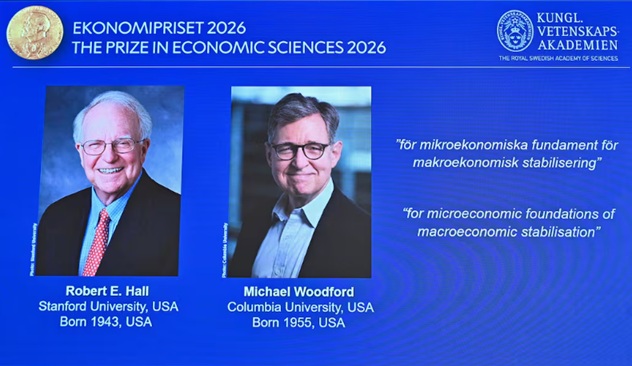
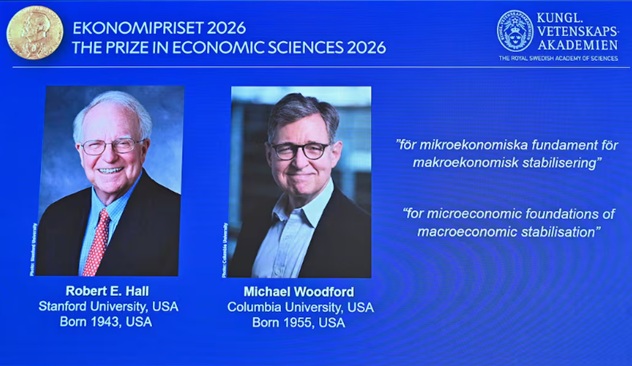
Stanford University Professor Robert E. Hall won the 2026 Nobel Memorial Prize in Economics—shared with Michael Woodford—sparking renewed discussion on the Hall-Rabushka flat tax proposal.
Hall was awarded the Nobel Prize on Oct. 12 primarily for his microeconomic foundations of macroeconomic stabilization, though he is widely recognized as a co-author (with Alvin Rabushka) of the Hall-Rabushka Flat Tax. Hall and Rabushka are Hoover Institution economists.
 Designed in the 1980s (and updated later), the flat tax replaces complex progressive brackets with a single, uniform tax rate on wages above a generous standard deduction, while taxing businesses on cash flow (revenue minus wages, purchases, and investment).
Nearly half of U.S. states now feature a flat income tax or no income tax at all, drawing heavily on the single-rate, simplified compliance model.
Tax structure:
Hall-Rabushka: Operates as a two-part, single-rate consumption tax (often styled around 19%) that splits the base into an individual wage tax and a business value-added tax (VAT). Savings and investment income are excluded at the individual level to prevent double taxation of capital.
Current U.S. federal code: Operates as a progressive income tax with seven federal marginal brackets ranging from 10% to 37% (plus separate payroll, capital gains, and corporate income taxes).
Deductions & loopholes:
Hall-Rabushka: Wipes away almost all itemized deductions, charitable contributions, mortgage interest deductions, and standard business loopholes, designed to fit on a postcard-sized form.
Current U.S. federal code: Features a large standard deduction alongside numerous itemized deductions, tax credits (like the Child Tax Credit), and special provisions.
Exemptions:
Hall-Rabushka: Protects lower-income households via a large family-size personal allowance (such as a $25,500 exemption for a family of four).
Current U.S. federal code: Protects lower-income earners via a zero-bracket/standard deduction and progressive scaling, where only income hitting higher thresholds is taxed at higher rates.
Hall being awarded the Nobel Prize “surely adds credibility to the flat tax, that even those people would think it’s good,” Arthur Laffer, a longtime GOP adviser who is credited with helping develop supply-side economics in the 1970s, told the Washington Examiner.
Joe Bishop‐Henchman, the executive vice president at National Taxpayers Union Foundation, said polling indicates voters find the current federal tax system too complicated and that the Hall-Rabushka proposal would also give every taxpayer an exemption based on family size.
“It retains a lot of the progressivity of the code and avoids taxation of investment activity,” Bishop-Henchman said. “So it’s both pro-growth and fair.”
The group Unleash Prosperity, which supports free markets and repealing regulations, released a statement congratulating Hall on the win on Monday.
“Congrats to our friend Robert Hall,” the group said. “But the award really should have been shared with our UP co-founders Arthur Laffer and Steve Forbes who popularized this idea and spread the word around the world!”
Among those who may seek the presidency in the future, Florida Gov. Ron DeSantis has said that he wanted to see the IRS abolished and a flat tax system introduced.
During a CNN town hall event, DeSantis said he thinks such an arrangement would be an “ideal tax system to be able to take away the distortions.”
“I want to eliminate the IRS, and I would like a flat one, single rate flat tax,” DeSantis said. “Obviously, I would only do it if it was lower taxes for everybody. But that is the ideal tax system.”
The Hoover Institution is releasing a new edition of the foundational book The Flat Tax following the announcement of Hall’s Nobel Prize.
