
Analysis by WorldTribune Staff, December 4, 2025 Real World News
More than 16 months after the first of two assassination attempts on then leading presidential candidate Donald Trump, the matter has long been put to rest by the nation's legacy media and at best shelved by the FBI's finding that Thomas Crooks acted alone.
The book “Bulletproof: The Truth about the Assassination Attempts on Donald Trump” by Jack Posobiec and Joshua Lisec concluded that the probability Crooks acted alone is infinitesimally small. Excerpts follow [See also, Book: Curiosity, outrage were lacking following Trump assassination attempts, November 16, 2025]:
Scenario 1: The official narrative
The official narrative is one of chance and happenstance.
Thomas Crooks — a twenty-year-old with a bright future, potential mental struggles, and no discernible motive — scaled a local building that just so happened to be unsecured by Secret Service. He just so happened to attempt an assassination — again, for no discernible reason — at the one rally where security was so embarrassingly lax it ended up with several officials resigning in shame. All without knowing that this rally would offer him the best chance.
Assessment: Least Likely.
Scenario 2: The Iranian plot
Iran has been spoiling for revenge against the United States, and Trump in particular, for the drone strike on Qasem Soleimani. In fact, there is a human source that said the Iranians were planning an attack, and the day before the rally, As if Merchant, an individual with ties to Iran, was arrested for plotting to carry out political assassinations. It was also known that Crooks had encrypted messaging apps on his phone, making it plausible that he was in contact with the Iranians. However, there is no evidence that Crooks had any contact with Iran. ...
Assessment: Unlikely
Scenario 3: The inside job
Take a deep-seated resentment for the bureaucratic “deep state” and combine that with the dozens of jaw-dropping, pack-your-bags-you’re-fired failures of the US Secret Service, and people start to wonder whether this was intentional. After all, what other conclusion could you draw from the fact that rally attendees were alerting Secret Service to the shooter’s presence minutes before he took eight shots at Trump, and sadly took the life of Comperatore?
Unlike the other two theories, this one has motive, means, and opportunity.
Motive, in that Trump was a spanner in the works, a disrupter; the regime had tried co-opting him, had tried character assassination to keep him down, had tried to throw him in prison, but nothing seemed to be sticking.
Means, in that Crooks had encrypted communications platforms.
And opportunity, as the federal government would be providing security for an outdoor rally, which is considered one of the most dangerous political events in terms of risk to the politician.
Assessment: Most Likely
. . . .
The Twelve “Botches”
Consider the various “security failures” that occurred in Butler, Pennsylvania, that collectively allowed Thomas Matthew Crooks to seep deep into presidential territory and to get off eight shots — eight chances to kill Donald J. Trump.
Not one. Eight.
Recall that Lee Harvey Oswald needed three to murder President John F. Kennedy in broad daylight, and the man and his motorcade were moving. ....
Botch 1, Failure to Attend Security Briefing: Recall that the Secret Service did not attend the security briefing the morning of the rally, leaving local SWAT and sniper teams without crucial coordination and communication.
Botch 2, Inadequate Counter-Sniper Preparedness: Counter-sniper teams showed up only the day before the rally to conduct site casing, rather than weeks prior as is standard. There was no initial plan to provide counter-sniper teams, and even when they were present, their communication tools were insufficient (no radios, only personal cell phones for communication).
Botch 3, Drone Security Refusal: The Secret Service refused drone security offered by local law enforcement, which could have provided crucial aerial surveillance — and made known sooner there was a kid with a gun prowling around within eyesight and earshot of President Trump.
Botch 4, Counter-Sniper Communication Failures: Counter-snipers and local law enforcement had no direct communication, severely hampering the ability to respond to threats in real-time. Radios set aside for Secret Service were never picked up, and there was no established method for cross-agency communication.
Botch 5, Inadequate Manpower: Secret Service agents were instructed not to request additional manpower for the rally, and any such requests were likely to be denied. This directly contradicted testimony from the acting Secret Service director, who claimed that no resources were denied. It seems to us that all they do is lie. Why?
Botch 6, Abandoned Overwatch Post: Officers from the Butler County ESU left their assigned overwatch post, which had a vantage point over the area where the shooter, Thomas Matthew Crooks, eventually fired shots. This abandonment created a significant vulnerability. This fact still has us in disbelief. As in, we are having a hard time believing this was not intentional.
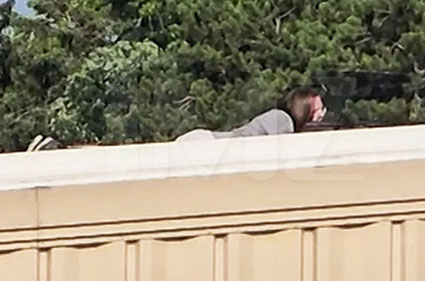
Botch 7, Failure to Secure Perimeter and Buildings: The Secret Service failed to secure buildings around the event, specifically the one Crooks used to carry out the attack. There was no surveillance or security presence on the roof from which the shots were fired.
Botch 8, Slow Response to Crooks: Despite being aware of the shooter’s suspicious activity ninety minutes before the incident, there was a delay in the Secret Service’s response. The counter-sniper hesitated to fire on the shooter, only doing so after a local SWAT officer had engaged.
Botch 9, Failure to Prevent Crooks from Accessing High Ground: Crooks was able to climb onto a roof, bear crawl to a vantage point, and take multiple shots at Trump, all while under the observation of law enforcement. The failure to intercept or neutralize him before the shooting is a significant lapse.
Botch 10, Failure to Secure Trump Immediately after Threat Detected: Trump was not immediately moved to a secure location after Crooks was identified as suspicious. The Secret Service allowed Trump to take the stage even after being aware of a potential threat.
Botch 11, Leadership and Operational Failures: The overall management and operational decisions, including the lack of communication, inadequate preparations, and refusal of additional security measures, indicate systemic failures within the Secret Service, exacerbated by leadership that appeared either negligent, or . . . complicit.
Botch 12, Lack of Specialized Medical Support:
The absence of a BORTAC medic, despite the high threat level, is another critical failure in the security plan. This one doesn’t seem like a big deal, at first, but consider a worse-case scenario — Trump was hit, but not fatal, and the wound was bad. How inconvenient for the president that the most-qualified, most-capable medical personnel would not have been present in Butler when the difference between life and death would have been literal seconds. How inconvenient.
These twelve failures reflect a severe breakdown in standard security protocols, coordination, and responsiveness. This is more than a competence issue. It’s integrity. And it may be even more than that . . . What are the odds that all twelve botches could occur on the very same day that there also happens to be an armed man with malicious intent present?


